AstraZeneca has twenty new medicines to launch by 2030. Each one can arrive like a consumer brand does, in every channel, for a fraction of the cost, with the review built in.
FOUR FILMS BELOW. PRESS PLAY, SOUND ON.
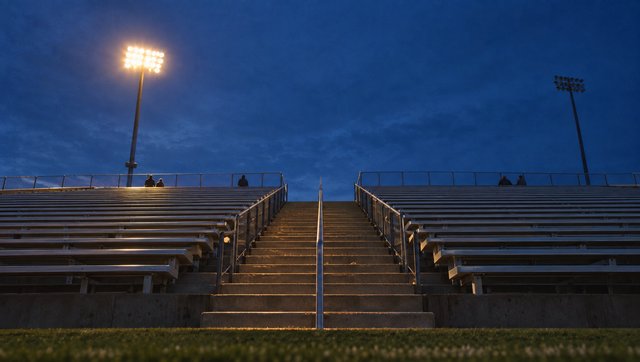
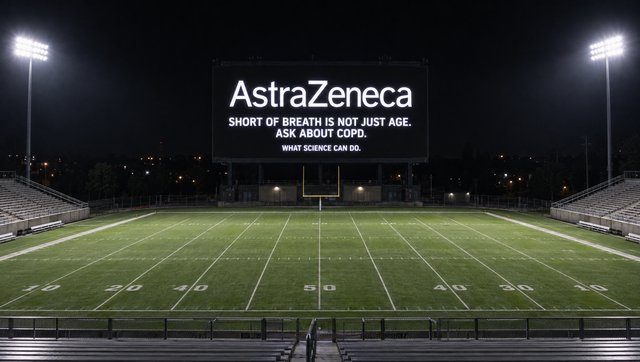
Unbranded, COPD. An empty high school stadium at dusk. Dolores, sixty-eight, climbs to the top row where she has always sat, one flight of eleven steps at a time, a hand on the rail, while the floodlights come on bank by bank. The breath is the loudest sound in the film. The scoreboard carries the only words: short of breath is not just age.


Why it works. A film about breath in this category shows a doctor and a chart. This one gives a sixty-eight-year-old woman the treatment a sports brand gives an athlete. Same message, a register nobody in pharma is using.
Unbranded, infant RSV. A paper town in winter, every house and every gust cut from paper. The wind wants in. The shutters close, the towel goes under the door, the blanket comes up, the window holds, and the wind tears into pieces. Morning. The baby sleeps. One line from a mother: this winter, we were ready.


Why it works. A season the category explains with a calendar and a chart, told as a children's book. It plays on a phone at six in the morning and on the screen in a pediatrician's waiting room, and it is made of the same forty pieces of paper either way.
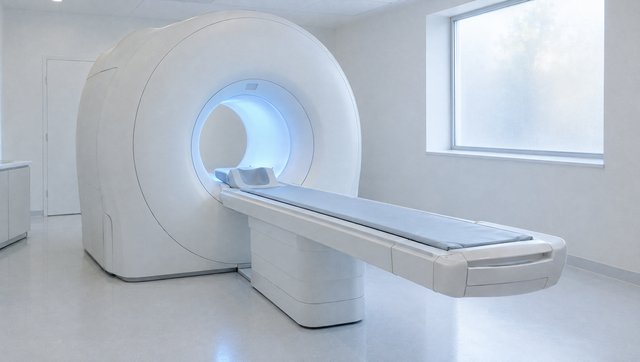
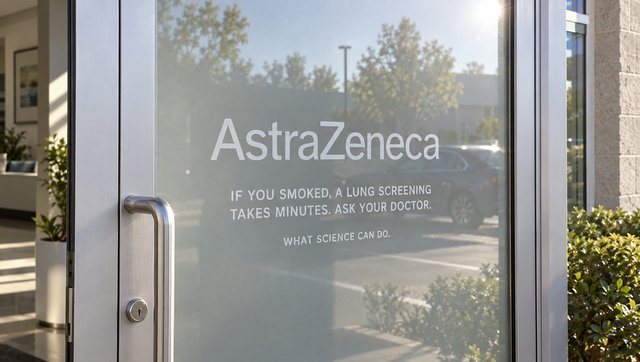
Unbranded, lung screening. A suburban Saturday. Frank, sixty-three, has time for a car wash, a bookshelf and the whole weather report, and none for an eleven minute scan. His daughter has one number and keeps saying it. The scan takes less time than his coffee.


Why it works. Comedy is the register pharma is least allowed to use and the one a sixty-three-year-old man will watch twice and send to his brother. The joke is a clock, and the clock is the message.
The launch itself. A plain white carton leaves a distribution dock at ten to five in the morning and reaches the first hand at two minutes past nine: the van, the pharmacy's back door, the scan, the shelf, the bag, the leaflet read in a parked car. No medicine is named. The carton carries the wordmark and the commitment: twenty new medicines by 2030.


Why it works. A launch morning shot with the care a consumer brand gives a product drop, and none of the noise. It is the film any of the eleven launches to come can open with, the day before the branded work starts.
An AstraZeneca launch needs its creative for patients, caregivers, clinicians, pharmacists and payers, in every channel, in every format, in two languages. One system holds the brand's approved modules, the claims, the safety information, the imagery and the mark, and makes every piece from them, so nothing is written twice and nothing reaches a person before the review.
Hover a module, or a piece.
A pharma piece takes twenty-one days to approve on average, and the work before review adds five to a hundred and fifty days more, per asset, in the industry's own benchmark. The system makes the piece in days, carries the rules on every one of them, and hands medical, legal and regulatory a piece that is already in the form they approve.
Clear, conspicuous and neutral on every broadcast piece, at the size and pace the rule asks, since the compliance date in November 2024.
Every branded piece carries the important safety information from the approved module, in every format, in every language, never retyped.
Benefit and risk held at the weight the rule asks, checked on every piece before a reviewer sees it.
Every version, every reviewer's note, every approved module, kept on one link, so the second launch starts where the first one ended.
IN SEPTEMBER 2025 THE FDA SENT THOUSANDS OF LETTERS ABOUT MISLEADING ADS. A LAUNCH THAT SHOWS UP DIFFERENTLY STILL HAS TO SHOW UP RIGHT.
New medicines by 2030, in AstraZeneca's own words, on the way to eighty billion dollars of revenue. Nine were delivered by the end of 2025. Eleven launches to come, each with its patients, its caregivers and its clinicians, each in every channel, each in two languages, each through the same review.
Pick the launches a year, the audiences, the formats and the languages, and what one finished national piece costs AstraZeneca today. The board prices itself, both ways.
One launch, inside what is already planned: every audience, every channel, every format, in two languages, in review by day sixty. The modules approved once, the pieces made from them. Any two-week review that misses your bar, stop paying.
The twelve major brands, every audience, every channel, every launch on the 2027 calendar. Fifteen or more finished originals a month plus their cutdowns, one innovation drop a month, unlimited takes, every frontier model, no meters. Your calendar, your review, your record.
Every brand and every launch to 2030, one system. One review, one record that learns from every launch, and a portfolio that never waits for an agency again.
ALL IN MEANS ALL IN · THE TAKES, THE MODELS, THE CHECKS AND THE LINK · NO METERS
The whole standing line, the twelve major brands, every audience, every channel, against AstraZeneca's selling, general and administrative line, month for month: $45K against $1,661M. The money will not notice. The launches will.
AstraZeneca sets its 2027 budgets by October. One launch can start inside what is already planned, and be in review before the numbers are final. The films above were made in one day. The sprint gets ninety.
RitualAds is a creative studio for brand film: from a single line of brief we build the whole campaign world, concepts, boards and finished moving pictures, made end to end under one roof. For AstraZeneca that means every launch gets creative that looks like nothing else in the category, for every audience and channel, made in days, with the review built in, at a cost the SG&A line will not notice.
The meeting takes thirty minutes.
RITUALADS · CARLOS@RITUALADS.COM